
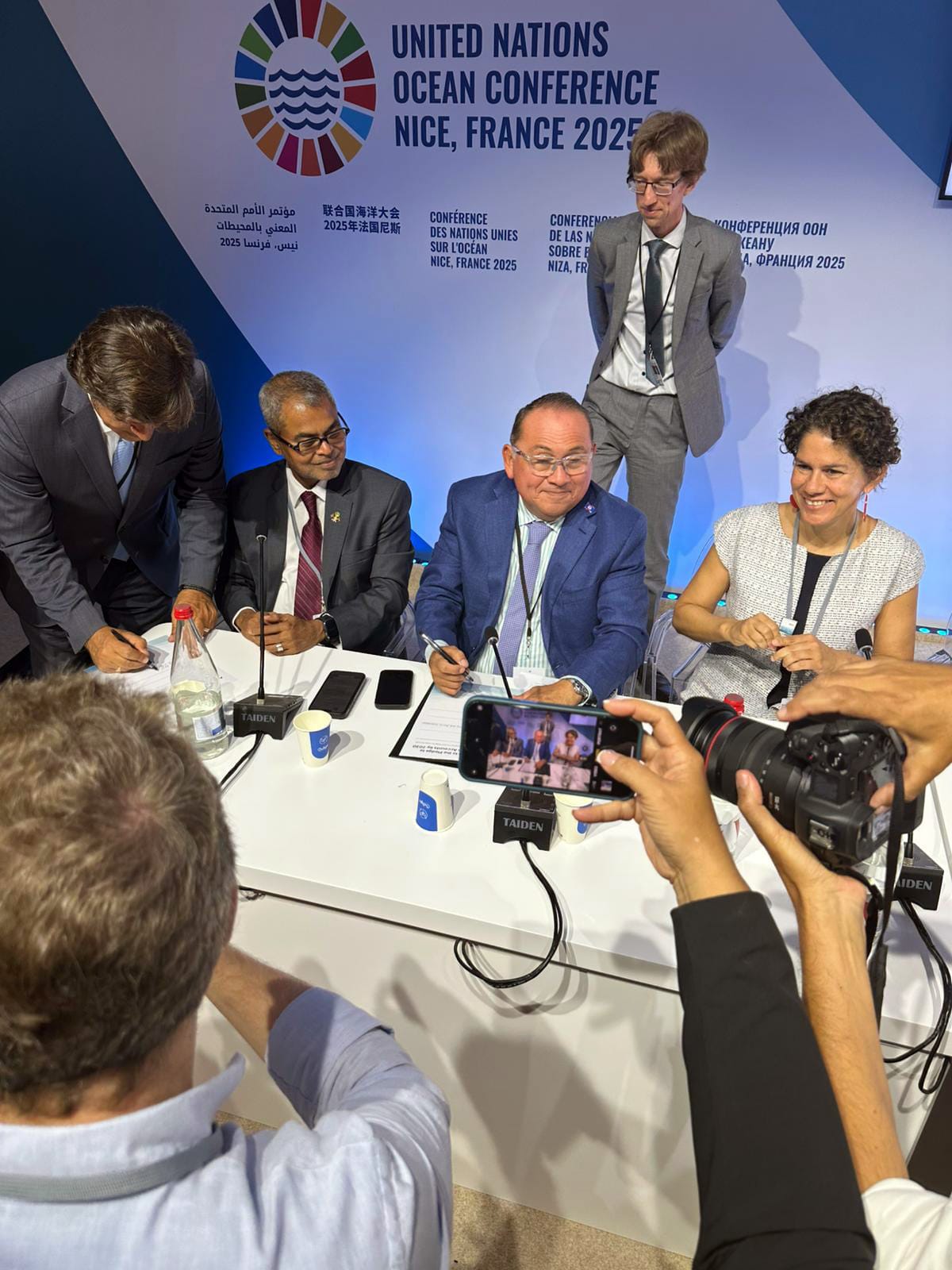
Joint Declaration: Pledge to Advance Ocean Accounts by 2030
Signatories to the Pledge to advance Ocean Accounts by 2030
Learn More
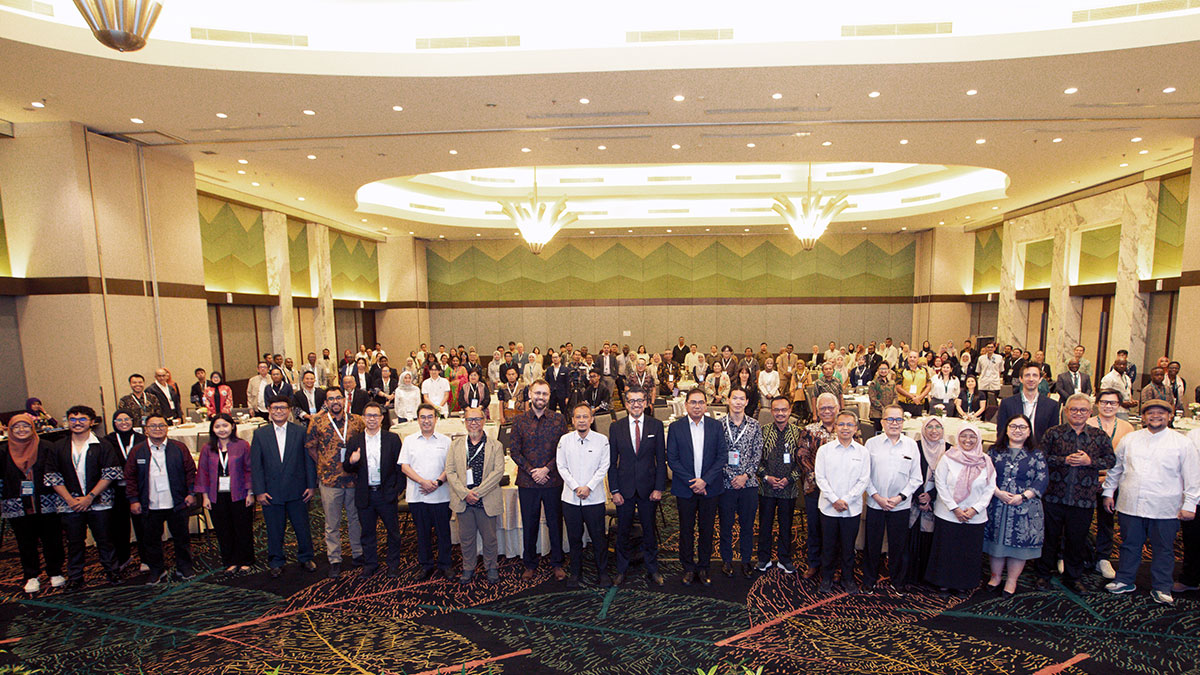
The Bogor Strategic Action Plan is a practical roadmap for scaling ocean accounts across the Global South, developed by attendees during the South-South Ocean Accounting Exchange in March 2026 in Bogor, Indonesia.
The Bogor Strategic Action Plan is a practical reference that countries and partners can draw on when making the case for better resourcing of ocean accounting and aligning technical support with national priorities.
View the full Bogor Strategic Action Plan (pdf)The document was developed by 23 countries during the South-South Ocean Accounting Exchange in March 2026 and reflects practical challenges and opportunities that surfaced through the three days of technical workshops, fellowship exchanges, panel discussions, government working-group sessions, and development-partner consultations.

The Action Plan translates high-level commitments made at UNOC3 and through the Pledge to Advance Ocean Accounts by 2030 into actionable strategies grounded in the lived experience of countries advancing ocean accounting implementation.
The Bogor Strategic Action Plan outlines five key areas for strategic action:
Action Area 1: Closing the Implementation Gap — From Data to Decision-Ready Accounts Moving beyond baseline data collection towards structured statistical accounts through national ocean data coordination mechanisms, integrated data platforms, longitudinal data investment, indicator harmonisation, and modular architecture that builds core infrastructure before layering analytical tools.
Action Area 2: Connecting Ocean Accounts to Finance and Investment Embedding ocean accounts as a data pipeline to capital, defining investment-readiness criteria for nature-based solutions, developing blue financial instruments (bonds, insurance, carbon markets), integrating ecosystem assets into fiscal frameworks, and establishing South-South finance exchange platforms.
Action Area 3: Strengthening Governance, Institutional Ownership and Political Will Securing domestic champions, embedding ocean accounts in national planning frameworks (NDCs, NBSAPs, marine spatial plans), advancing inter-ministerial coordination, leveraging regional platforms for political buy-in, and developing governance and social accounts that capture both formal and informal management mechanisms.
Action Area 4: Building Human Capacity and South–South Peer Networks Institutionalising the South-South Exchange as a recurring platform, developing data-to-accounts translation guidance, bridging science-to-policy gaps, embedding ocean accounting into university curricula, establishing trust frameworks for data sharing, and ensuring country commitment as a prerequisite for technical support.
Action Area 5: Expanding Scope — Toward Integrated and Sub-National Accounts Connecting ocean accounts with land-based accounting, plastic and pollution accounts, freshwater accounting, and blue carbon frameworks; strengthening sub-national and community-level accounting capacity; and designing holistic dashboards that integrate ecosystem health, economic performance, social wellbeing and governance effectiveness.
Ocean accounts organise environmental, economic and social information into an integrated, internationally comparable framework anchored in the System of National Accounts (SNA) and the System of Environmental–Economic Accounting (SEEA).
The distinctive value lies in enabling countries to move beyond GDP to measure what national accounts alone do not capture: changes in ocean wealth, the contribution of marine ecosystems to economic sectors and livelihoods, and the social and governance conditions that determine whether ocean use is sustainable.
The role of ocean accounting in decision-making has been recognised across multiple multilateral frameworks — in the Convention on Biological Diversity outcome documents (including COP-15 Decision 15/24 and the Kunming-Montreal Global Biodiversity Framework) and in the UNOC3 Political Declaration (Nice, June 2025), which recognised ocean accounting for the first time in a major multilateral ocean instrument.
The Pledge to Advance Ocean Accounts by 2030 has been signed by 19 countries and 7 organisations. The Ha Long Consensus (March 2025) established the first regional commitment to ocean accounting in South and Southeast Asia. More than 60 ocean accounting initiatives are now active across 50+ countries, including 7 multi-country initiatives at regional level.
Throughout this trajectory, Global South countries have played a distinctive technical and strategic leadership role — through co-chairing the Global Ocean Accounters Partnership (GOAP), pioneering national implementations, developing operational dashboards and data systems, and driving regional consensus-building across Africa, Asia, the Pacific and Latin America. The Bogor Strategic Action Plan builds on that leadership and the practical experience shared at the Exchange.
Despite these commitments, Global South countries face capacity gaps, limited resources, and implementation barriers. The Action Plan provides concrete strategies to address each of these barriers.
View the full Bogor Strategic Action Plan (pdf)
Signatories to the Pledge to advance Ocean Accounts by 2030
Learn More

Learn More

GOAP Social Data Audit Tool helps countries evaluate if their existing national data systems can support the integration of social dimensions into Ocean Accounts.
Learn More